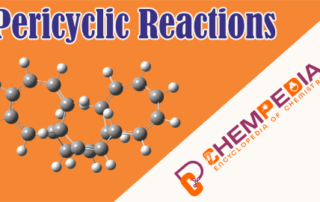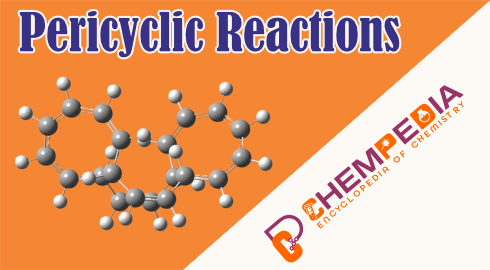
Pericyclic Reactions

Lesson Structure Pericyclic Reactions Part 1 (Electrocyclic Reactions) 1.0         Objectives 1.1         Introduction 1.2         Molecular orbital symmetry 1.3         Frontier orbitals of ethylene, 1,3-butadiene, 1,3,5-hexatriene and allyl system. 1.4         Classification of pericyclic reactions. 1.5         Woodward-Hoffmann correlation diagrams 1.5.1     Correlation diagram Electrocyclic reaction 1.5.2     Frontier Molecular Orbital (FMO) approach for electrocyclic reactions 1.5.3     Perturbation Molecular orbital (PMO) approach [...]

2026-02-10T22:40:55+05:30February 10th, 2026|

Elimination Reactions

Lesson Structure 1.0       Objectives 1.1       Introduction 1.2       E2 Elimination Reaction 1.3       E1 Elimination Reaction 1.4       E1CB Elimination reaction 1.5       Orientation of the double bond 1.6       Reactivity effects of substrate, attacking base, leaving group and solvent medium 1.6.1    Factors effecting E2 Elimination 1.7       Mechanism of pyrolytic elimination reaction: 1.8       Cope elimination 1.9       Saytzeff elimination 1.10     Hofmann [...]

2026-02-09T22:27:24+05:30February 9th, 2026|

Addition to Carbon-Hetero Atom Multiple Bonds

Lesson Structure 1.0       Objectives 1.1       Introduction 1.2       Mechanism of metal hydride reductions in saturated and unsaturated carbonyl compounds 1.3       Addition of Grignard reagent with carbonyl groups 1.4       Wittig reaction and its mechanism 1.4.1    Modified Wittig Reaction (Horner-Wadsworth-Emmons reaction) 1.5       Knoevenagel reaction 1.6       Claisen condensation 1.7       Mannich reaction 1.8       Stobbe reactions 1.9       Stork enamine reaction 1.10     [...]

2026-02-09T21:02:01+05:30February 9th, 2026|

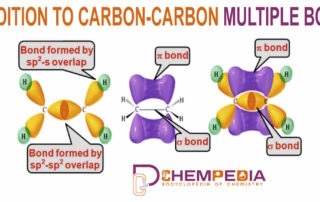
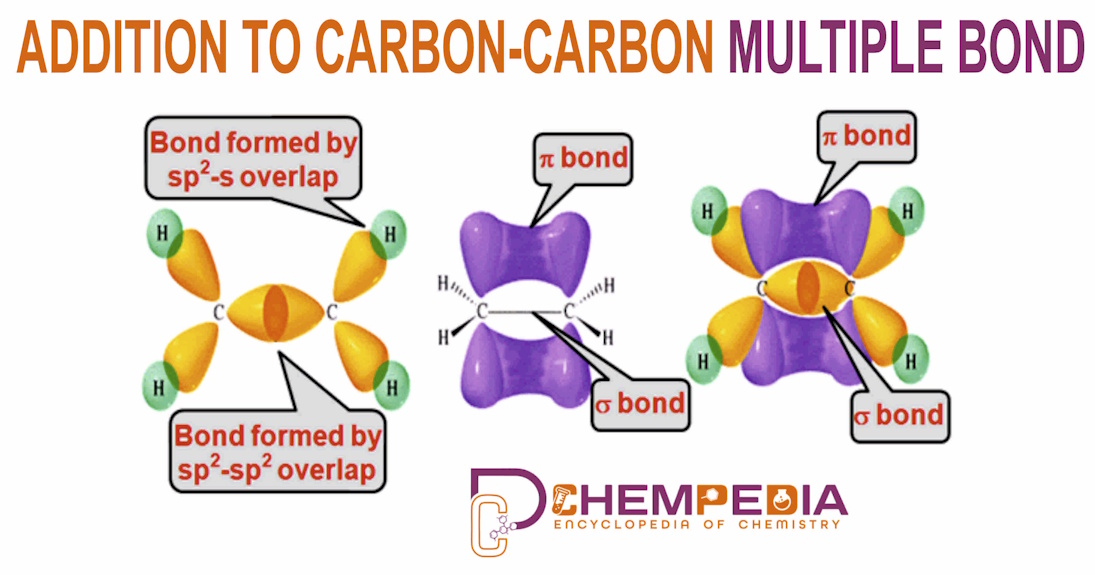
Addition to Carbon-Carbon Multiple Bond

Lesson Structure 1.0       Objective 1.1       Introduction 1.2       Electrophilic addition 1.2.1    Halogen addition reaction 1.2.2    Hydrohalogenation 1.2.2.1 Anti-Markovnikov addition 1.2.3    Oxymercuration reaction 1.2.3.1 Regioselectivity and stereochemistry of oxymercuration 1.3       Nucleophilic addition 1.3.1    Cyanoethylation 1.3.2    Hydro-cyano-addition 1.3.4    Epoxidation of α,β-unsaturated carbonyls 1.4       Free radical addition 1.4.1    Stereochemistry of Free radical addition of HBr 1.4.2    Free Radical Addition [...]

2026-02-08T21:20:02+05:30February 8th, 2026|

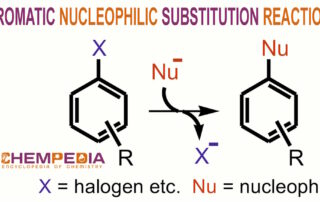
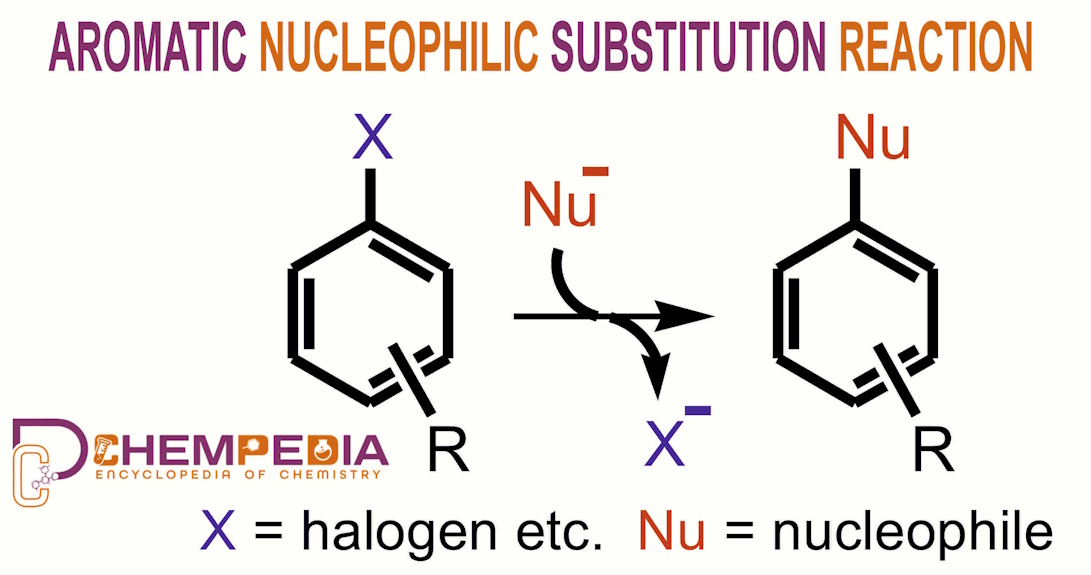
Aromatic Nucleophilic Substitution Reaction

Lesson Structure 1.0     Objectives 1.1     Introductions 1.2     The SNAr mechanism 1.2.1  Evidence for Nucleophilic Aromatic Substitution (SNAr) mechanism: 1.3     The SN1 mechanism 1.3.1  Evidence for a unimolecular SN1 mechanism 1.4     The benzyne (arynes) mechanism 1.4.1  Benzyme (aryne) mechanism: 1.5     The SRN1 mechanism 1.5.1  Evidence for the SRN1 mechanism: 1.6     Effects of Reactivity & Structure, leaving [...]

2026-02-08T21:13:55+05:30February 8th, 2026|

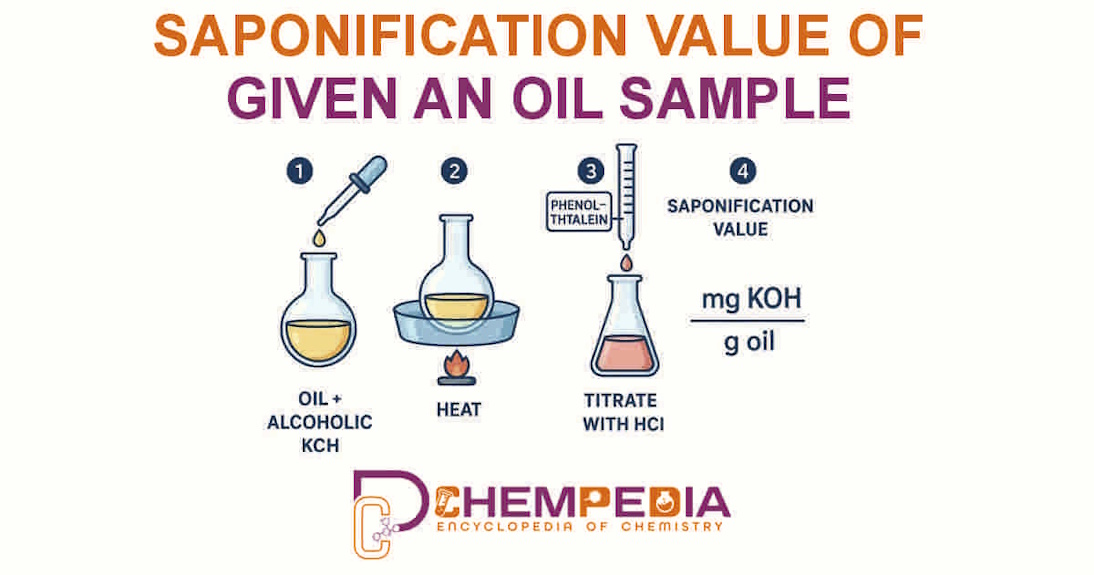
Saponification value of oil

Aim: Determination of saponification value of given an oil sample Principle: Saponification value defines as the number of mg of KOH required to saponify or hydrolysis 1 g of oil/fat. In this estimation KOH reacts with the fat/oil to gives glycerol and the potassium salt of the corresponding fatty acid. KOH is added in excess [...]

2026-02-11T21:16:46+05:30February 7th, 2026|

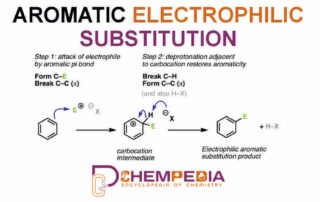
Aromatic Electrophilic Substitution

Lesson Structure 1.0       Objectives 1.1       Introduction 1.2       The arenium ion mechanism 1.2.1    Energy profile diagrams of Aromatic Electrophilic Substitution eaction: 1.2.2    Nitration 1.2.3    Sulphonation 1.2.4    Halogenation 1.2.5    Alkylation 1.2.6    Acylation 1.3       Orientation and reactivity 1.3.1    Electrophilic substitution in other poly-substituted benzene rings: 1.4       Some name reactions involving aromatic electrophilic substitution mechanism: 1.4.1    Vilsmeir reaction 1.4.2    [...]

2026-02-07T12:07:52+05:30February 5th, 2026|

Aliphatic Electrophilic Substitution

Lesson Structure 1.1         Objectives 1.2         Introduction 1.3         Unimolecular Substitution Reactions (SE1) 1.3.1     Evidence for the SE1 mechanism 1.3.2     Stereochemistry of SE1 reaction 1.4         Bimolecular Substitution Reaction (SE2) 1.4.1     SE2 (Front) and SE2 (Back): Evidence and Stereochemistry 1.4.2     SEi mechanism: Evidence and Stereochemistry 1.5         Electrophilic substitution accompanied by double bond shift 1.6         Effect of various factors [...]

2026-02-07T12:09:35+05:30February 5th, 2026|
Go to Top